Saturday, September 19, 2009

Science and Nature

I've never understood people who say that science takes the joy out of things ... as if somehow understanding the mechanism behind a phenomenon takes away its power and beauty. I find that understanding the science behind nature adds substantially to my appreciation.

First, let's start with the basics. What are we actually interacting with when we experience nature?

Well, the human body evolved a number of ways of transmitting information about the outside world to our conscious brain. These senses are abstractions. We do not generally experience 'the real world', we experience a filtered version of it.

Let's start with something simple, like temperature.

Temperature: When we feel heat or cold, what we're experiencing is the energy level of the gas particles that are striking against our skin. We don't experience the individual sensation of each particle hitting us; our nervous system summarizes and abstracts the data. If the temperature is sufficiently hot or cold, we may also experience pain -- which is the sensation of damage being done to our body.

A much complicated sense is vision, which defines how we experience the world more than any other sense.

Vision: When we see things with our vision, we're seeing a heavily filtered version of reality. The lens in our eyes focuses photons onto the photoreceptive cells in our retina, which are then transmitted into our neural network. Our photoreceptive cells only gather data on a limited part of the electromagnetic spectrum. These signals are heavily processed by our nervous system -- but are quickly made available to our conscious mind. We don't see the individual photons. We see a shifting panorama of color, texture and hue. Our brain is wired to pay particular changes to things that are out of place, as measured against our expectations, which are established by paradigms, which have been created out of the experiences and social interactions to that point in our lives.

This is a long and complicated way of saying: Our eyes detect some of the photons that strike us, our nervous system turns that into a 'movie' of sorts, and then our brain filters out most of that and focuses our attention on the parts it thinks are important. This all happens (nearly) instantaneously, entirely outside of our conscious awareness.

But I'm dancing around the crux of the issue, which is that we experience things on a macro (non quantum mechanical) level. This is particularly noticeable when we come to the next sense ...

Touch: When we feel the experience of touch, we are primarily experiencing the aggregate sensation of the electron cloud of one group of atoms (the thing we're touching) as it interacts with the electron cloud of the atoms in our skin.

All objects are made of atoms, which have an electron 'cloud' that is quantum mechanical in nature.


Image Source and Article


The 'cloud' of electrons in these photos is actually composed of 6 electrons -- two in the inner shell, and four in the outer shell. Due to the nature of quantum mechanics, these electrons are very very very random. They are so random that their exact position and momentum cannot be pinned down. This is not a limitation of our measuring tools, it is a fundamental quality of every object in the universe (this quality only becomes obvious on really small objects). In the photo shown above, this randomness can actually be seen as a 'cloud' of electrons -- because the position and momentum of the electrons cannot be accurately measured, they can only be seen as a hazy cloud of objects that are kind of in one place ... kind of in another place ... and, well, kind of in another place at the same time! :)

That's a photo of a single atom. Atoms form together like legos to form molecules, which look like this:


Image Source and Article


This is a pentacene molecule, which is composed of 22 carbon and 14 hydrogen atoms.

Every object in our environment is formed from many, many, many of these molecules. Really. It's a staggering amount.

So what we feel when we touch something is the aggregate of the outer electron cloud ... that wispy, ephemeral layer of randomness that can't actually be measured or pinned down (more on this in a moment).

Now, sometimes touching things can cause a chemical reaction ... like when you spill battery acid on your hand. A chemical reaction means that the molcules of your hand are interacting with the molecules of the acid, and they're changing into different molecules. This is a bad thing for a living organism.

Other times we experience a temperature differential (see above), only this time it's caused by touching a solid against another solid (or a liquid). The result is pretty much the same.

The Human Experience: What I find fascinating about this is how distorted our view of the world is. We don't experience the world as it is; our perceptions are heavily altered by our evolved senses.

The primary thing we don't experience is how random and bizarre the universe really is. Our senses act as protective parents, keeping us safe from all that scary knowledge outside our door :)

I'm excited to know that the leaf, the branch, the wisp of air that touches my cheek ... they're all created from the same star stuff. That it's all vibrating and shifting around randomly, twisting and churning in an endless dance ... a silent ballet, hidden from our view by the economizing force of evolutionary adaptation.

But hey, I'm a curious bastard. I can understand the evolutionary value of it all ... but damn it, I still want to see how everything works firsthand :)

This is where science comes in handy.

The most beautiful piece I've ever read on the natural world wasn't written by a poet or a philosopher, it was written by a scientist who saw patterns in the complex web of life.

(I had forgotten what a great opening chapter this is until I reread it recently).

What it comes down to is that the complexity of the living world emerges from (relatively) simple particles and forces. Understanding this doesn't reduce the world to a formula and make it mechanistic, it makes the complexity we see around us all the more miraculous.

(At least in my opinion) there's nothing that presupposes that we'd have to be here, conscious and full of wonder about the world. There's nothing written in the fabric of the universe that makes humans particularly special. What's special is that we're here at all ... what's special is that such brilliant complexity has emerged from very simple patterns.

We can't see a lot of this with our senses, but we can begin to understand it with our conscious minds. This adds to, rather than subtracts from, the beauty of the natural world.
Friday, September 18, 2009

Beaver Dam Photos

Here's something you may not have in your area ... a beaver dam.

First, a video ... recording video is new to me, and kind of experimental :)

A path to the dam, clearly not created with 6'3" people in mind:

path to beaver dam

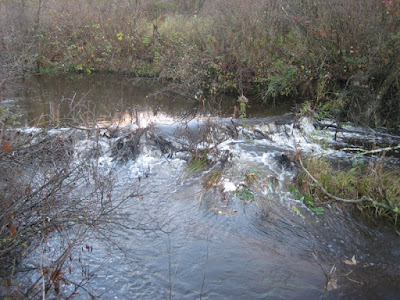
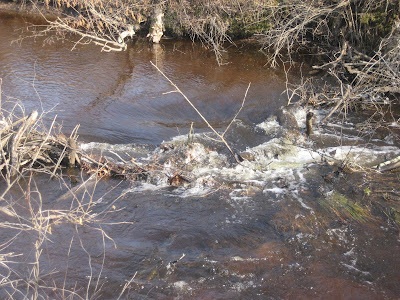
The upper part of the beaver dam, as of a few hours ago:

beaver dam photo

beaver dam photo

The same dam last year when the water was very high. It's hard to see it in the photo, but the dam is creating about an 8-10" change in the water level. The lower dam created a similar drop in water level.

beaver dam at high tide

And at very high water levels:

beaver dam at very high tide

This is the upper part of the dam, shown in springtime. It's quite a bit smaller than the other dam, and is partially supported by a natural rock formation:

upper beaver dam

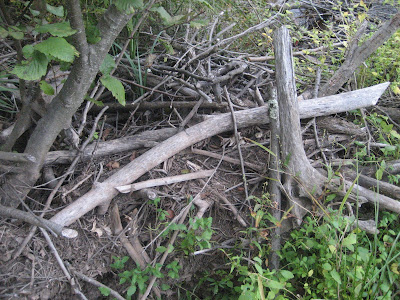
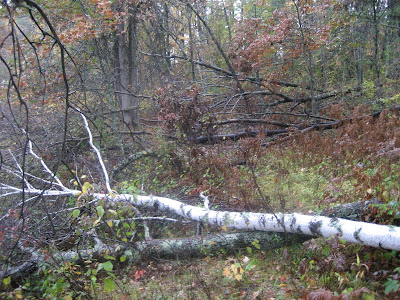
The destruction caused by the beavers is almost human-like in its intensity:

beavers taking down trees

OK, not really quite to the level of humans ... but it's still pretty destructive.

Thursday, September 17, 2009

Corporate Personhood

Corporate Personhood was created on a shaky legal foundation, but it's likely to get worse as the US Supreme Court looks at the issue. They're likely to grant corporations even more free speech rights, further unfettering their ability to influence public policy.

Stephen Colbert tackled this subject in recent shows, I have to say I do not recall the concept of corporate personhood being questioned in the media in ... well, forever.

But even more surprisingly, Justice Sotomayor recently stated that:

"... the majority might have it all wrong -- and that instead the court should reconsider the 19th century rulings that first afforded corporations the same rights flesh-and-blood people have.

Judges "created corporations as persons, gave birth to corporations as persons," she said. "There could be an argument made that that was the court's error to start with...[imbuing] a creature of state law with human characteristics."


If there was a unified anarchist political party, I'd have to guess that ending corporate personhood would be at the top of the party platform.

Footprints

I did some further exploration of the nearby beaver dam today (which is actually in two parts), and found the path most of the animals in the area take down to the waterfront.

I'm pretty sure this one is deer:


I'm not certain about this one:


EDIT, added later ... a bearprint:

bear footprint

And I could be mistaken, but I'm pretty sure this is human-who-walks-along-edge-of-creek-and-nearly-loses-boot:


I also discovered that beaver dams aren't very good for someone with mold sensitivities to walk across. When you compress the dam, it smells like a moldy compost pile :)

Tuesday, September 15, 2009

Tiny House Iterations

For anyone that hasn't been severely injured by toxins, this may seem like an odd discussion to be having. But I think that it helps to illuminate some of the compromises mandated by this disability.

===

Regarding the tiny home design v1.0, Lou wrote:

"I really, really, really like the idea of having the entrance through the bathroom. That kind of thing would drive a feng shui person nuts (my mom too) but it makes perfect sense to the chemically sensitive. If anyone came over to visit they could wash off the chemicals and change into something non-toxic before entering the rest of the home."

I did not mock up the design; I'm working with a homebuilder.

We've modified the entrance slightly -- an additional 6" setback, with the shower set in a small alcove to the right of the door.

I may or may not decide to add ventilation to the room; having a screen door next to the shower may be sufficient.

The general concept behind this is that the interior of the home is a clean room, capable of being sealed up in the event of airborne toxic exposures (a neighbor painting their house, for example). An entry room with washable walls and a shower means that a minimal amount of toxins would be brought into the home.

I have found this is necessary, as when I become sick from toxic exposure I need a 100% safe place to return to. But a home can't be 100% safe if it's regularly exposed to outside sources of toxicity.

I'm not sure how many visitors I'd be entertaining, I see the interior of the home as a medical device. Friends or family coming in from the city carry massive amounts of toxicity with them.

This is where a nice three-season screen porch would come in handy :)

"A tiny home may necessitate additional consideration to vapors, something I never really thought about until now-in an area this small if someone is wearing a scented product and doesn't completely remove it, the vapors are going to be more concentrated and/or less avoidable."

I already have several carbon filters, my primary concern would be water vapor. This would be limited by water use in the home being (primarily) limited to the entryway room -- which can be vented out by opening the front door.

I'm a bit hesitant to add a vent fan, as any air sucked out is replaced by air making its way through gaps in the interior walls. This air isn't very safe.

There are air and heat exchangers available, but I prefer to keep things as simple and low-cost as possible. Technology like a front door, and a small fan to power the air filter are much simpler to repair and replace.

"Same goes for the kitchen-you may benefit from exhaust ventilation."

I've also redesigned the kitchen -- just a small sink and countertop at the far end of the room, with a small window above the sink (which could be opened to vent out steam/humidity). I'd use the side wall for food storage; canned vegetables and bulk goods, primarily.

I be doing most of my cooking outside. A rice cooker is pretty effective outside, up to around 20 degrees or so. Veggies can be steamed on top of rice, quinoa, millet, etc.

"Some fans built for mobile use are made for low voltage, what are your plans for power?"

I plan to have it rigged to run on regular A/C power (with a small amount of plugins), I can't see being off the grid being practical. Filtering the interior air is critical.

Any plans for the south wall? I noticed there was no window there..."

I was going to have a full bank of windows on the far end of the trailer, which would provide a great area for a computer desk and pub table.

"Just throwing this out there-how about a mansard roof? Has anyone tried that? It would give you a little more headroom when in either bed, but wouldn't raise the overall roof height any. In large homes the mansard roof requires a little bit of additional interior support, but a structure this small and light might be able to get away without it."

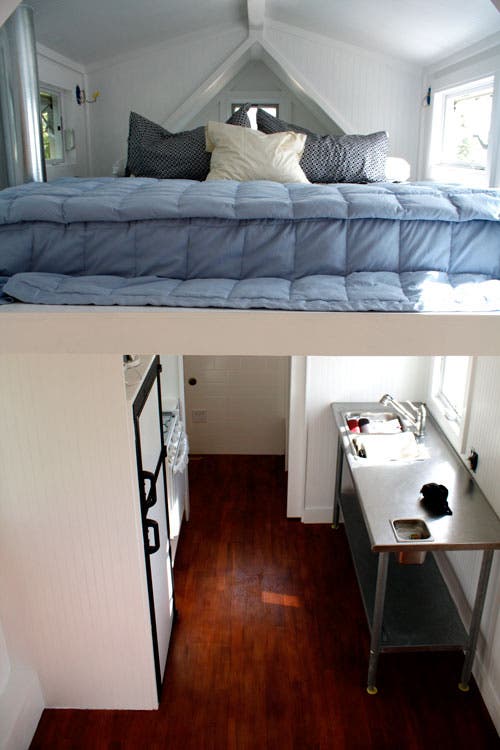
I considered the idea, I think that something like this would be more practical.

I really like the amount of light it adds to the loft.

"And the bottom view shows a foundation. Is the house going to be in the ground or is that a frame on a trailer?"

It's intended to be set on a trailer, and therefore to be portable. Where I live right now is not sustainable in the long term; I'm far too isolated.

The last time I tried traveling in search of community, it ended badly. I really need a portable "safe room" in which I can detoxify and regain my strength.

Thank you for the input, I appreciate it.

Putting Up a Big-ass Wall

Please forgive my digression for a moment -- there's a point I wanted to make at the end of a little personal history :)

When I was growing up, my parents fought a lot ... and then they got divorced at an early age. This meant moving to the big city, where I felt really out of place and insecure. I never really fit in again after that. I made a few close friends, but then we moved again and I had to start the process all over. Having poor social intelligence skills didn't make this easy.

I cried a lot; I'd cry when I was sad, I'd cry when I lost or didn't get my way, I'd cry for no reason whatsoever. This led me to be further ostracized (boys don't cry), which led me to become even more disconnected from the people around me.

Eventually I learned to hide my feelings. I put up a big wall around me: wearing lots of black clothing, adopting an uncooperative attitude at school, being pretty negative about things and generally pushing people away from me. It wasn't a very wise adaptation, but building a wall did its job: it kept me safe from ridicule. This wall became deeply embedded into my psyche, and to this day it's hard for me to let down my guard regarding really private things ... things that reveal too much of my true character.

The point of all this?

When I talk about disconnection, it's not just some broad concept about our larger culture. I'm talking about it on a very personal level. Most of my friends don't even notice that there's a big-ass wall in front of them -- it's simply a part of being Erik.

I still struggle to open up to the rhythms of the natural world, to the thoughts and feelings of others ... it's very difficult for me. I can appreciate nature on an intellectual level, and I can relate to other people on an emotional and empathic level. But there's still a really big disconnect.

I have to imagine that this is the same type of difficulty people raised thinking that "meat comes from the grocery store!" have when you try to talk to them about factory farm practices. It's really hard to make that conceptual leap, because it doesn't just require new facts ... or a paradigm shift. It requires opening up a part of yourself to the unknown.


===

Yes, grammar nazis: When you put 'big-ass' in the title, it is proper to hyphenate it and capitalize the first letter of the word.

Monday, September 14, 2009

Beaver Sacrifice

The beavers in my area have unique religious practices.


Here you can see them preparing a pyre, where they will later sacrifice a beaver heretic.

And in the Darkness Bind Them ...

I used to watch the 700 Club once in a while for a good laugh*.

One of their more common segments was how "(insert name) had a hole in their heart, was doing all sorts of self-destructive things, and then came to find salvation in Jesus. You, too, have a hole in your heart. You know it's there ... a hollow place that's looking for meaning. You can find this meaning in Jesus Christ!"

Christianity is a movement that responded to the increased sense of disconnection felt by members of the aggressive culture that was spreading throughout the middle east.

As developed over 3 centuries, Christianity differentiated itself from Judaism by asserting that although you're an awful terrible sinner, that a god (one of your betters, which you learned from an early age was an important thing to keep track of) has sacrificed himself so that you can be saved.

The sense of disconnection you feel? A pang of guilt over the culture you're participating in, the pain of backbreaking labor? All of this is easily explained -- this life is meant to be painful and cruel. Your eternal reward comes when you die, but only if you play along while you're still alive.

There are many adaptations in our culture that account for, and even justify the sense of disconnection we feel. As you might expect, these memes have evolved to become quite powerful over the past 2,000 years. These concepts are often so deeply embedded into our culture, that it's a bit difficult to recognize them sometimes.


===

* Yes yes, I know ... I used to get a good laugh from tracking the exploits of right-wing nutcases. I have an odd sense of humor! :)